Case Study
LiveClaw
OpenClaw-powered desktop companion with Live2D avatars, voice input/output, and a practical Electron architecture.
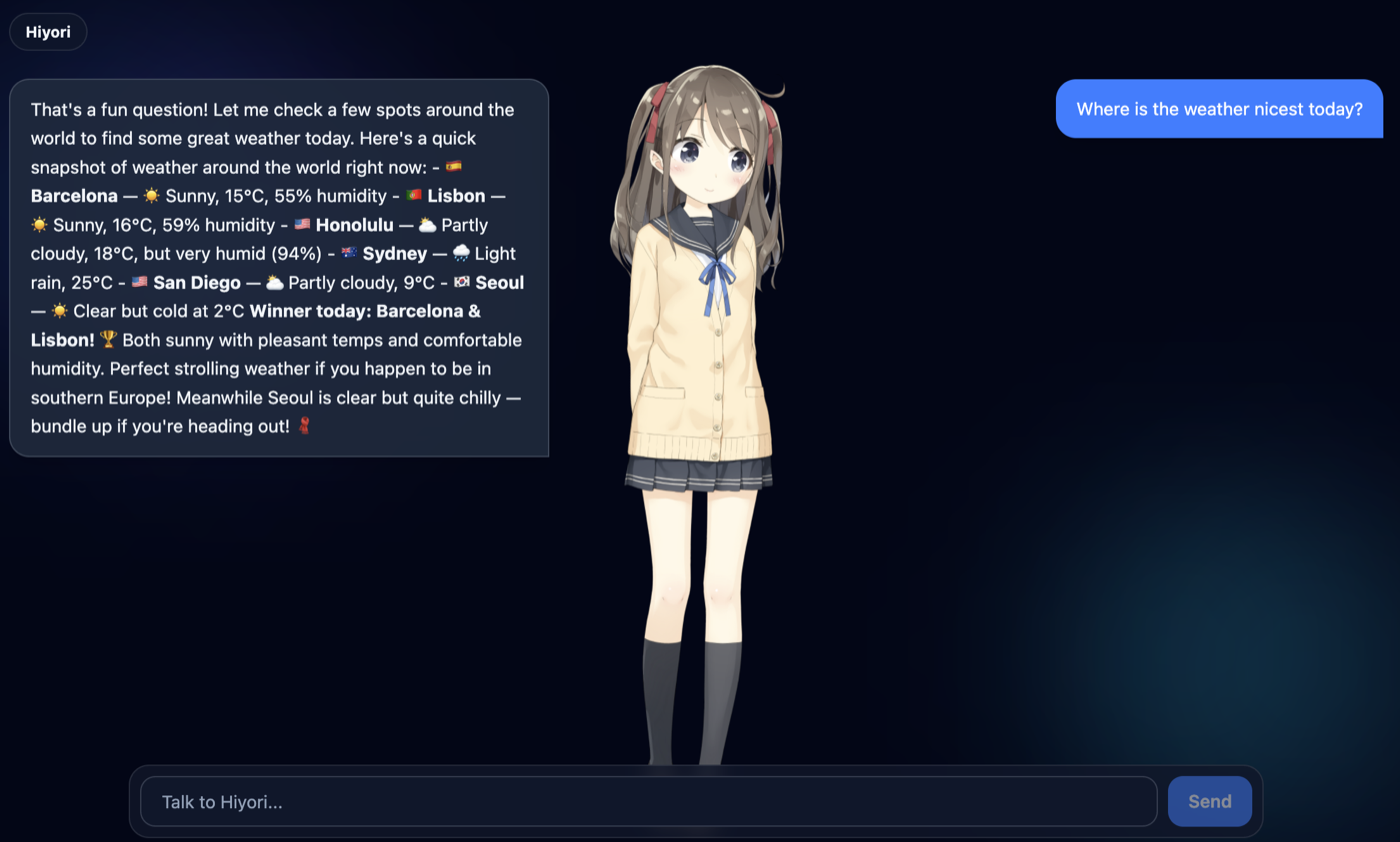
Project Overview
LiveClaw is an OpenClaw-powered desktop companion currently in active development. It combines Live2D characters, local-first chat, and speech features in a single Electron app built with React and TypeScript.
Key Features
- Electron Desktop Shell: Native packaging targets for macOS, Windows, and Linux
- Live2D Integration: Avatar rendering and motion playback via
@charivo/render-live2d - OpenClaw Chat Backend: OpenAI-compatible local LLM calls routed through the main process
- Direct TTS Playback: Renderer-side OpenAI TTS for quick local voice output
- Clear Process Boundary: Renderer UI and provider calls are separated through IPC
- WIP Roadmap: Foundation prepared for STT and streaming upgrades
Architecture Notes
- Renderer Layer: React UI + Charivo orchestration + Live2D panel
- Main Process Layer: OpenClaw provider and Node-side API calls
- Provider Access Pattern: Chat via IPC to avoid renderer CORS/PNA issues
- TTS Path: Direct renderer API usage for local development convenience
Technical Challenges & Solutions
Challenge 1: Cross-process coordination
Chat events, rendering lifecycle, and provider calls were split cleanly between renderer and main process responsibilities.
Challenge 2: Character synchronization
Live2D state and conversation flow were wired through Charivo so motion/response behavior stays coherent.
Challenge 3: Local-dev practicality vs security
Direct renderer-side TTS improves local iteration speed, but requires explicit key-handling cautions for trusted environments.
What I Learned
- Desktop packaging and runtime workflows with Electron + electron-vite
- Hybrid architecture patterns for renderer/main process separation
- Applying framework modules (
Charivo) in a real desktop product - Making pragmatic tradeoffs while keeping a path to production hardening
Impact
LiveClaw validates a practical path from reusable character framework modules to a user-facing desktop companion product.