Case Study
KiMCP
MCP server that exposes Korean APIs (Naver, Kakao, TMAP) as tools for LLM applications and agent workflows.
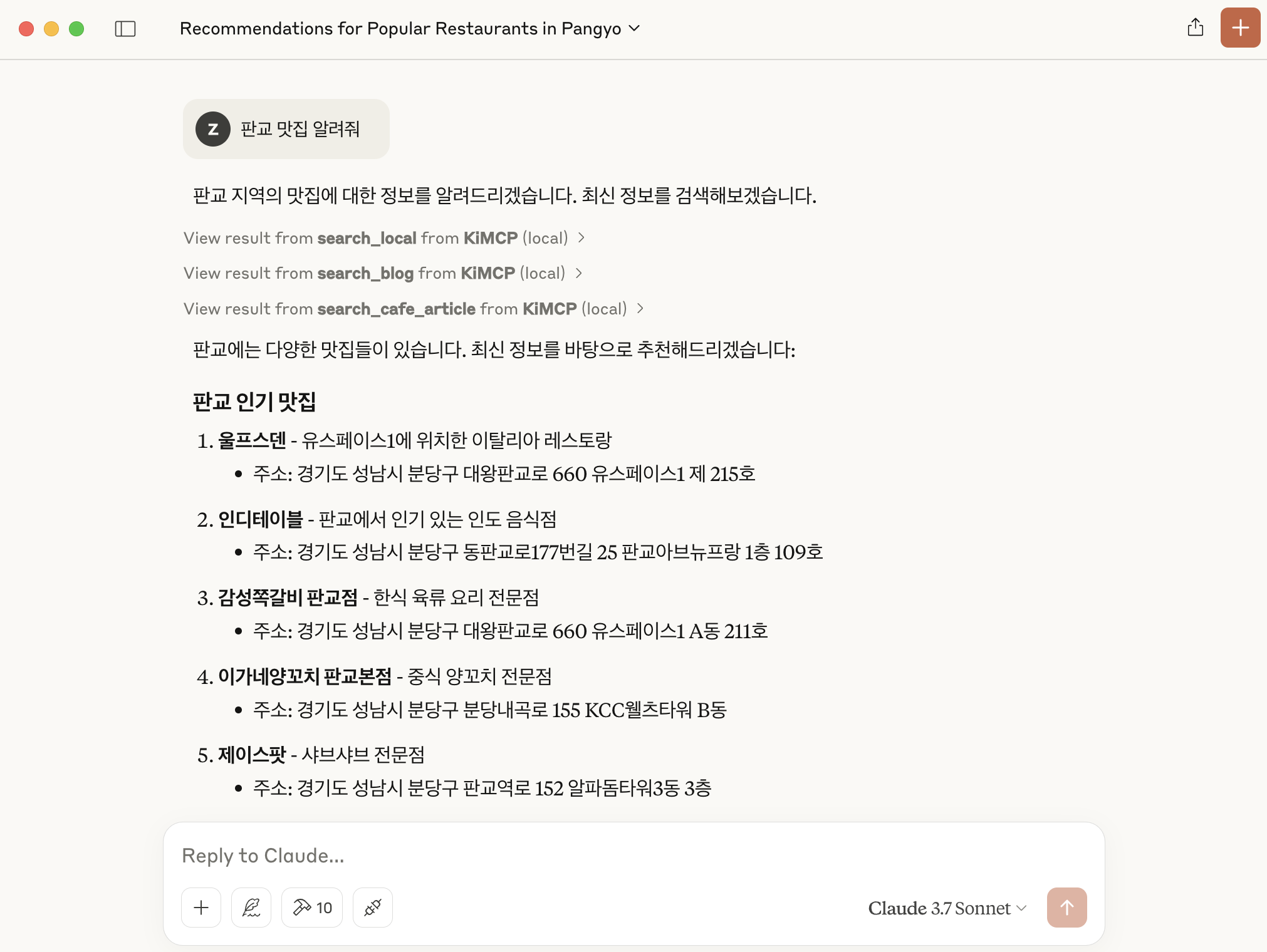
Project Overview
KiMCP (Korea-integrated Model Context Protocol) is an MCP server that helps LLM applications use Korean web and map APIs through a unified tool interface. It focuses on practical integrations needed by Korean-language assistant products.
Key Features
- Naver Search Tools: Blog, news, cafe, knowledge iN, image, local, and shopping search
- Daum Search Tools: Blog and cafe integrations
- Navigation Integrations: Kakao map search plus driving and transit routing through Kakao/TMAP
- Tool-level Fallback Behavior: API-specific tools can be enabled/disabled by available keys
- Claude Desktop Integration: Supports direct install and local inspection workflows
Technical Challenges & Solutions
Challenge 1: API heterogeneity
Unified multiple provider APIs behind MCP-compatible tools with consistent input/output patterns.
Challenge 2: Operational flexibility
Designed key-dependent tool activation so partial setups still provide useful capabilities.
Challenge 3: Developer onboarding
Kept setup friction low with uv workflows and direct mcp install / mcp dev commands.
What I Learned
- Building MCP-native tool servers for real assistant use cases
- Designing interfaces across API ecosystems with different conventions
- Balancing broad coverage and maintainable Python service architecture
- Improving local DX for agent tooling experimentation
Impact
KiMCP expands what Korean-focused LLM assistants can do by connecting local data and navigation ecosystems to MCP-compatible clients.